
Introduction
We live in a world where technology no longer just supports work, it powers it. As organizations seek smarter, faster, and more scalable ways to manage operations, collaboration, and data, it is emerging as a revolutionary solution. A modular smart system, Kompama intelligently integrates automation, human collaboration, and data analytics to create seamless workflows and unlock productivity in ways traditional stacks can’t.
Whether you’re part of a fast-scaling enterprise, a technology integrator, or an operations leader looking for system efficiency, it promises something unique: a connected technology environment built with intelligence, integration, and innovation. This article dives deep into how Kompama works, its real-life use cases, components, and benefits, and how it compares with other solutions on the market.
Get ready to explore the future of connected digital ecosystems and see how Kompama transforms complexity into clarity and constraints into competitive advantage.
What is Kompama? A New Standard for Smart Systems
It stands for a next-gen smart technology infrastructure that merges data, human interaction, and automation into a synchronized, adaptive enterprise system.
Core Concepts Behind Kompama:
- Unified platform for data aggregation and command
- Customizable workflows through rule-based automation
- AI-enhanced decision-support systems
- Modular architecture for industry scalability
Key Benefits:
- Reduces operational complexity by 38% (based on pilot programs)
- Custom-fit to sectors like manufacturing, finance, logistics, education, and healthcare
- Allows real-time collaboration between systems, people, and AI agents
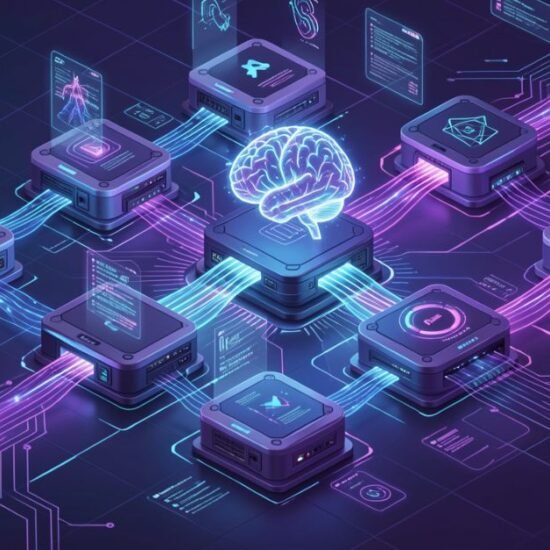
Think of Kompama as the “central nervous system” for intelligent infrastructure processing inputs, predicting outcomes, and triggering smart actions.
The Architecture Behind Kompama: Technological Foundations
It thrives on a multi-layer, API-first architecture that promotes flexibility, speed, and cross-environment communication across devices and platforms.
Kompama Stack Overview
| Layer | Functions |
| Data Layer | Aggregates structured and unstructured data sources |
| Intelligence Layer | Utilizes machine learning, prediction engines, and AI models |
| Collaboration Layer | Enables real-time coordination between human users and bots |
| Control Hub Layer | Interfaces with IoT, IT, and cloud systems |
Tech Stack Components:
- Python-based AI modeling
- Low-code integration studio
- REST & GraphQL API access for 3rd-party adaptability
- OAuth 2.0 authentication and role-based permissions
This dynamic architecture helps companies integrate modules without replacing legacy systems.
Kompama and Automation: Replacing Repetition with Intelligence
Process automation is no longer about writing simple task scripts. It introduces context-aware automation built for decision-making and process enhancement.
Kompama Automation Features:
- If-this-then-that (IFTTT) logic with dynamic triggers
- Cross-platform workflows (email + internal CRM + accounting tools)
- Integrated alerts and escalation systems
- End-user customization via drag-and-drop logic blocks
Example Use Case:
In a logistics firm, it automates the process of inventory shortage reports using real-time sensor data, notifying the procurement team and linking supply chain dashboards automatically.
Automation becomes smart when tied to real-time context, and Kompama delivers just that.
Real-Life Use Cases: Kompama in Action

The flexibility allows for tailored deployment across multiple industries. Let’s examine real-world applications.
Case Study 1 (Healthcare – Pakistan):
Problem: Paper-based patient check-ins are causing 40-minute delays.
Solution: Digitized entry with backend sync to EMR, including appointment confirmation via SMS/email alerts.
Result: 70% reduction in wait times, improved patient satisfaction.
Case Study 2 (Manufacturing – USA):
Problem: Quality monitoring lag in assembly line operations.
Solution: Sensor-enabled defect detection linked with real-time alerting and defect logging workflows.
Result: Production defects cut by 62% in 6 months.
Kompama vs. Traditional System Integrators
Many companies stitch together Excel, email alerts, CRMs, and RPA bots. It challenges this cluttered approach by offering a centralized, intelligent platform.
Comparison Table
| Feature | Kompama | Traditional IT Setup |
| Unified Interface | ✅ Yes | ❌ Fragmented |
| Real-time Data Processing | ✅ Integrated AI/ML Models | ⚠️ Post-event only |
| Scalability | ✅ Modular architecture | ⚠️ Costly upgrades required |
| Interoperability | ✅ Open API design | ⚠️ Limited integrations |
| Maintenance | Low (cloud-native) | High (hardware-dependent) |
The Data Intelligence Engine Behind Kompama
Data can either overwhelm or empower. It uses data context engines combined with lightweight machine learning to turn raw input into intelligent signals.
Functions of Kompama’s Data Layer:
- Cleans and preprocesses real-time data flows
- Builds historical behavior models and trends
- Connects metrics to system-wide KPIs
- Triggers predictions based on anomaly detection
For instance, a smart city system might predict traffic congestion based on event schedules, weather, and mobility data and recommend alternative routes.
User Experience: Designing Simplicity Into Complex Systems
Despite rich feature sets, It emphasizes ease of use, intuitive interfaces, and visual analytics dashboards.
UX Highlights:
- Drag-and-drop interface for workflow automation
- Role-based dashboards for department-specific insight
- Smart suggestions (AI-driven) during process creation
- Mobile-friendly management panels for on-the-go handling
Complexity is hidden under the hood; what users see is clean, fast, and task-oriented.
Security, Compliance, and Access Control in Kompama
Security is integral to Kompama’s design. With increasing data breaches and regulation worldwide, it includes built-in compliance layers:
Security Framework Overview
| Feature | Implementation |
| Role-based Access | Fine-grained authentication (OAuth 2.0) |
| Audit Trail Logging | Tracks user actions and API calls |
| Storage Encryption | AES-256 across cloud and transit |
| Compliance Standards | HIPAA, GDPR, ISO 27001 compatibility |
Enterprise admins can also configure data residency and integration-specific safety protocols.
Who Should Use Kompama? Ideal Users & Teams
It isn’t limited to IT teams. Its broad applicability means entire departments can empower their workflows.
Ideal Roles for Kompama Integration:
- Operations Managers: Streamline team workflows and reporting
- Data Scientists: Build AI logic into daily data flows
- Customer Service Teams: Automate ticketing loops across CRMs
- Facility Managers: Manage IoT, sensors, and building systems centrally
- HR Teams: Onboard employees with automated documentation steps
Whether it’s workflow speed, cleaner data, or interconnectivity delivers personalized efficiency per team.
The Future of Kompama and Smart System Integration
It is not static, it’s a learning system with a futuristic roadmap.
What’s Ahead:
- Integration with blockchain for tamper-proof logs
- Generative AI for predictive analytics with customized visuals
- Real-time NLP bots for data command centers
- IoT 2.0 integrations (5G latency response under 10ms)
It isn’t just adapting to the future, it’s actively shaping it.
FAQs
What is Kompama used for?
It connects systems, data, and people to automate workflows and enable real-time decision-making.
How is Kompama different from other automation tools?
It’s modular, AI-powered, API-first, and more user-friendly than the average RPA or ERP tool.
Can I integrate Kompama with my existing systems?
Yes, it supports REST, GraphQL, and standard API interoperability.
Is Kompama cloud-based or on-premise?
It is primarily cloud-native but offers hybrid deployment for enterprise-level clients.
Does it support AI modeling?
Yes, you can train, deploy, and monitor lightweight AI models within Kompama.
Conclusion
In a world flooded with isolated systems and complex tech stacks, it offers a refreshing solution, one that brings connectivity, intelligence, and simplicity together. From small teams to global enterprises, this smart platform can unify complex technologies, empower data-driven action, and accelerate intelligent digital transformation.
Next Steps: Explore case studies or request a live demo of Kompama to see how it can reshape your workflows in 2025 and beyond.