
Introduction
In the era of rapid technological advancement and a constantly changing digital ecosystem, very few things have so silently interested and yet grown more pertinent than Serlig.
As a tech analyst, digital entrepreneur, developer or curious consumer, getting to know how Serlig will be in 2025 will give you an idea of the future of decentralized ecosystems, smart infrastructure or web based interoperability depending on what precisely the term is used for in a particular application.
Although it is still, perhaps, a relatively exotic notion within the ubiquitous media, it is still being swept under the carpet in research laboratories, developer discussion groups and technological visions of business.
This guide includes the full, official, and comprehensive breakdown of what Serlig is, how it is being applied, the technical basis behind it, its advantages, shortcomings and the rationale of the importance of the same in 2025 and beyond.
We can unravel the rising innovation, break it down into human-comprehensible terms, and understand the true implications of this new technology for users, creators and industries in the future.
What Is Serlig? A Definition and Origin Overview
It denotes a decentralized system, protocol or framework of the next generation that augments the functionality of data, digital identities or autonomous functions over the internet. Its adopted meaning depends on its use, but there is a common theme: user-centric control, interoperability and modular architecture.
The word was originally a keyword in developer circles discussing encrypted grid environments, it then developed to become a keyword in creative tools in social decentralized integration, open infrastructure design or even hybrid AI microsystems.
Key Concepts:
- Standardization of smart technologies
- Emphasize decentralization or non-hierarchical controls
- Very high level of scalability and user configurability
- Zero-knowledge proofs, sandbox architecture, or enhanced indexing
When you hear about Serlig in 2025, you will most probably be crossing the boundary of ethical design, Web3 systems or interoperable data flows.
How Serlig Works: A Breakdown of the Technology or Platform
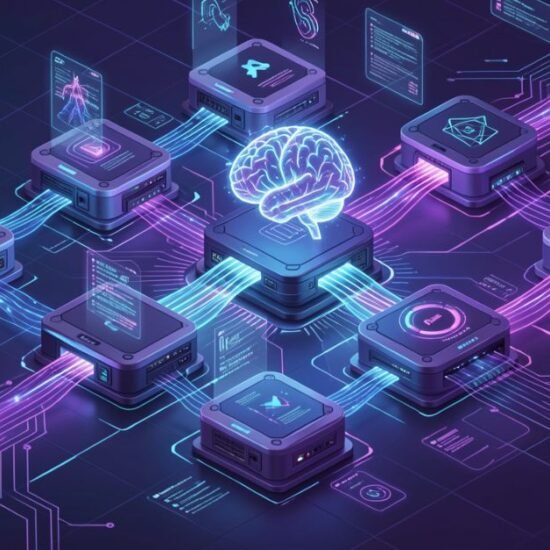
Made up of modules that communicate with one another via lightweight specifications, it functions as a tiered ecosystem.
It can handle data transit or user-generated logic intelligently without depending on outside control, making it a cross between a framework and a protocol stack.
Core Elements Could Consist of:
- Lightweight instances running separate but shared schemas are known as plug-in capable nodes
- The Unified Semantic Engine enables cross-platform language comprehension
- The Minimal Footprint Protocol is intended to lower energy and overhead costs
- Software Development Sandboxes: settings for safe testing and deployment
Visual Concept: How Serlig Layers Work Together
| Layer | Function | User Impact |
| Transmission | Manages logical communication | Faster transfer speeds |
| Identity | Handles authorization, data security | No central login required |
| Interface Bridge | Enables cross-platform display | Consistent experience on all devices |
| Smart Channel | Routes user actions to smart systems | Better personalization & automation |
It can improve everything from interoperable IoT dashboards to private communication networks, depending on the system it’s used with.
Core Use Cases and Applications in 2025
It has identified many practical applications to date in various industries as of 2025. All these application cases tend to focus on flexibility, security and autonomy as opposed to traditional models.
Popular Current Use Cases:
- Decentralized Content Management (no platform lock-in)
- Mesh-based IoT Systems Coordination
- Modularly encrypted healthcare record sharing
- Interoperability Tools between rival ledgers Blockchain Interoperability
- Identity shielding. Privatized Messaging Systems
It is flexible in its enterprise, civic and consumer tech environments, with its modular and independent building blocks, depending on what needs to be solved.
Comparing Serlig with Similar Emerging Technologies
It’s natural to compare Serlig to other frameworks when assessing it, but its scope and interoperability-driven attitude are frequently where it differs.
| Feature/Platform | Traditional API Architecture | Web3 DApp Stack | Serlig Ecosystem |
| Requires Central Server | Yes | No | No |
| Code Reusability | Limited | Low to Medium | High |
| Cross-System Compatible | Medium | Medium | High |
| Modularity | Engineered per use | Community driven | Inherent design |
| Energy Efficiency | Conditional | Variable | Optimized |
It might want to improve or span existing structures rather than replace them.
Advantages of Serlig Over Traditional Models
Serlig’s capacity to resolve historical issues using a contemporary toolkit is what makes it so promising. Changing digital interactions is more important than redesigning science.
Principal Advantages:
- Increased Security: No single point of failure or attack vector
- User control: crypto wallets as access IDs and decentralized permissions
- Flexibility: Compatible with all devices and network stacks
- Sustainable Scaling: Designed to expand without requiring additional servers
- No Vendor Lock-in: Ideal for municipal IT and open-source initiatives
It is becoming the new standard for development in many emerging digital ecosystems, particularly in areas where data ownership and interoperability are issues.
Limitations and Challenges Still Facing Serlig
It is not without friction, despite its potential. Its expansion is slowed by adoption, complexity and developer knowledge accessibility.
| Limitation | Impact in 2025 | Possible Solutions |
| Steep Learning Curve | Difficult for new developers | Better onboarding tools |
| Limited Public Documentation | Hinders academic adoption | Open-source publishing grants |
| Compatibility Uncertainty | May misalign with legacy systems | Middleware plug-in layers |
| Regulatory Risk | Legal testing not yet standardized | Policy collaboration efforts |
Who Is Using Serlig in Real-World Contexts
It might have begun as an inquisitive keyword in technical communities, yet it is currently finding its way in.
- Full-stack applications using non-centralized databases Tech startups
- Harmless messaging applications desiring to disidentify usage
- Pilots of municipal infrastructure (e.g., energy grids or mobility)
- Institutions of learning that utilize modular research pathways
- DAOs that seek flow of logic in a seamless manner
These early adopters view Serlig not only as a framework but also as a mindset change tech that places users prior to platforms.
Security, Privacy and Ethical Concerns
Considering that it is an identity-agnostic and open system, the presence of abuse or surveillance immunity questions becomes a question of concern.
Ethical Discussion Points:
- Is it possible to abuse the totally autonomous nodes?
- Will excessive anonymity be inviting bad actors?
- What would the regional privacy regulations (GDPR, CCPA) require Serlig to do?
Nonetheless, developers are counteracting this using stratified compliance modules, community voting systems and token based trust indicators.
What is notable is that insists on privacy by default, which is in line with the tech is too good phenomenon that is gaining momentum in 2025.
The Future of Serlig: Expert Predictions and Roadmaps
The majority of experts understand Serlig as a category maker, as opposed to a competitor. It is not attempting to be the next Ethereum or Linux, it is attempting to provide the bridging point between them.
Industry Predictions:
- By 2026: 10%+ of academic institutions will use Serlig based communications (source: OpenDev Report, 2025).
- Until 2027: Principles of Serlig nodes will be applied in civic and digital ID pilots in Europe.
- The SDKs of Serlig microservices are being considered by major software agencies to connect CMS, analytics and commerce.
It is also discussed that it can be integrated with AI architectures, which means that machine learning applications can have safer data environments.
How You Can Get Started with Serlig Today
Despite being a specialized area, it offers important venues for novices to learn and participate:
First Steps:
- Check out open-source systems that offer Serlig sandboxes or hubs
- Participate in a learning DAO that uses Serlig in its toolkits
- Participate in documentation initiatives that emphasize definitions that are readable by humans
- Use Serlig compatible APIs to begin development, then provide feedback
CTA that is actionable:
Create your own decentralized toolkit right now by investigating open SandNodes or joining a cooperative Serlig Git repository.
FAQs
In 2025, what is the purpose of Serlig?
Digital governance, communication tools and decentralized apps can all be supported by Serlig’s flexible and safe infrastructure.
What is a blockchain?
No, it functions both alone as a modular, interoperable framework and in conjunction with blockchain systems.
Can I use Serlig if I’m not a developer?
Technical knowledge is helpful, but no. It is being used by numerous platforms to create no-code interfaces.
Serlig: Is it open-source?
Indeed, community governance models and FOSS licenses are frequently used to host key components.
Is Serlig capable of guaranteeing GDPR compliance and privacy?
Yes, and there are tools to tailor privacy layers to a particular application or location.
Conclusion
Even though Serlig isn’t well-known yet, it marks a substantial advancement in the design of digital systems, the distribution of data, and ownership.
From open municipal systems to decentralized networks to ethical AI, it is making a name for itself in the user-first technology of the future.
In order to future-proof your comprehension of the upcoming digital world, it is imperative that developers, organizations and tech enthusiasts alike comprehend and interact with Serlig now.
Visit the rest of the site for more interesting and useful articles.