
Introduction
In today’s fast-evolving world of vehicle safety and driving technology, having advanced stability-control features is no longer just an upgrade it’s a necessity. One such innovation that’s gaining traction is StabiliTrak, a next-generation traction control system designed to enhance road safety in real time.
So, what is a StabiliTrak and why should drivers care?
Whether you’re navigating icy roads in Wisconsin or just trying to maintain control in a tight curve, StabiliTrak gives you an added layer of confidence. It offers more sophisticated controls than traditional electronic stability control (ESC) by adjusting engine torque and applying brakes independently to each wheel. Invented by General Motors, this system is now a standard feature in many of their vehicles and has paved the way for safer driving experiences across the board.
In this article, we’ll dive deep into what StabiliTrak is, how it works, how it compares to similar technologies, and whether it might be the safety feature you didn’t know you needed. Whether you’re a tech-savvy gearhead or a conscientious everyday driver, we explain it all.
What Is StabiliTrak?
StabiliTrak is General Motors’ proprietary vehicle stability enhancement system, developed to keep drivers safer by automatically adjusting vehicle control under poor road conditions or during sudden maneuvers.
How does it work?
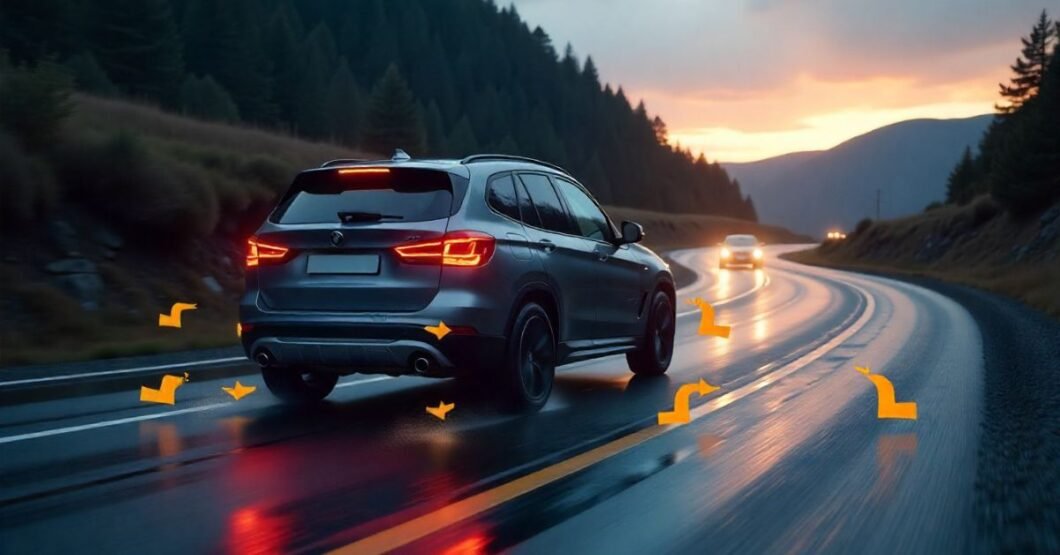
StabiliTrak uses a combination of sensors and software to compare your steering input with the actual movement of your vehicle. If the system detects a difference—say, you’re skidding or oversteering, What is a StabiliTrak makes adjustments to correct your trajectory.
Key Features
- Yaw rate sensors to track lateral movement
- Brake application control to individual wheels
- Throttle reduction for better grip
- Works at higher speeds than most basic traction systems
Why It Matters
- More proactive than standard ESC
- Offers improved handling on wet, icy, or loose surfaces
- Significantly reduces rollover risks in larger vehicles such as SUVs and trucks
How Does StabiliTrak Work?
Understanding how StabiliTrak functions can help you appreciate its value and recognize when it’s working on your behalf.
Step-by-step Breakdown
- Monitor Input: It continuously reads your steering wheel angle, vehicle speed, yaw rate, and lateral acceleration.
- Compare & Detect: Compares intended direction with actual vehicle movement.
- Take Action: Automatically reduces engine power and applies brakes selectively to realign the vehicle.
Benefits of This Process
- Maintains vehicle stability in turns
- Prevents understeer (front tires lose grip)
- Corrects oversteer (rear tires lose grip)
Common Activation Scenarios
- Merging onto highways
- Navigating winding mountain roads
- Driving on snow, gravel, or rain-slicked surfaces
Bullet Points
- Controls both axle torque and wheel braking
- Enhances handling in SUVs and heavier utility vehicles
- Engages at high speeds, unlike basic TCS systems
Semantics Note: “Dynamic stability control,” “advanced safety systems,” and “electronic vehicle monitoring” are relevant context terms used in technical documentation for StabiliTrak.
StabiliTrak vs. Traction Control
While both are designed for safety, StabiliTrak and Traction Control Systems (TCS) serve different purposes.
| Feature | StabiliTrak | Traction Control (TCS) |
| Controls side skidding | Yes | No |
| Adjusts engine torque | Yes | Yes |
| Works in oversteer | Yes | No |
| Brake application | Individual wheels | Usually applied together |
| Example scenario | Regains control in icy turns | Prevents wheel spin at launch |
Key Differences:
- TCS prevents wheel slippage during acceleration.
- StabiliTrak ensures directional control during unsafe or unpredictable conditions.
- StabiliTrak utilizes TCS components but adds steering and yaw correction.
Bottom Line: Think of TCS as a subset of what StabiliTrak offers.
Components That Power StabiliTrak
To keep you safe, StabiliTrak relies on a network of smart, interconnected vehicle components.
Main System Components:
- Yaw Rate Sensor: Detects sideways movement.
- Steering Wheel Position Sensor: Compares driver input with vehicle movement.
- Wheel Speed Sensors: Measures rotational speed for slippage.
- Throttle Actuator: Reduces power during skids.
- Brake System Actuators: Applies brake force where needed.
How They Work Together
- These sensors send real-time data to the central control module.
- If something goes off pattern, the system responds in milliseconds.
Use Case Example
You’re driving through a curve at speed. The rear end starts to slide. The system immediately detects the yaw rate is off and counteracts by applying brakes on one or more wheels before you even notice the skid.
Semantically Related Terms: sensor fusion, vehicle control module, mechatronics, integrated control systems.
Common Causes of StabiliTrak Alerts or Warnings
You may have seen a warning on your dash: “Service StabiliTrak.” Here’s what might trigger it:
Top Causes
- Faulty wheel speed sensor
- Broken steering angle sensor
- Low battery voltage
- Malfunctioning ABS components
- Defective yaw rate sensor
Symptoms You Might Notice
- Loss of traction in normal conditions
- Frequent system engagement
- System turns off automatically
- Warning lights intermittently
Troubleshooting Tips
- Check vehicle battery
- Inspect brake system
- Scan for trouble codes (OBD-II scanner)
- Don’t ignore safety could be compromised
Diagnostic Tools Used by Mechanics
- Tech 2 Scanner (used by GM)
- Bosch KTS module diagnostics
- OBD-II scanning apps (for general users)
Which Vehicles Use StabiliTrak?
StabiliTrak is a General Motors-exclusive system, though similar tech exists in all modern vehicles.
Common GM Vehicles with What is a StabiliTrak
- Chevrolet Silverado
- GMC Sierra
- Buick Enclave
- Cadillac Escalade
- Chevrolet Malibu
Other Automakers’ Equivalents
- Ford: AdvanceTrac
- Toyota: Vehicle Stability Control (VSC)
- Honda: Vehicle Stability Assist (VSA)
- Audi: Electronic Stabilization Program (ESP)
Important Note: The core functions are similar, but terminology and implementation can vary.
Benefits of Driving with StabiliTrak

Why should you care about having a vehicle with what is a StabiliTrak?
Major Advantages
- Enhanced road safety
- Improved control in poor conditions
- Reduces rollover accidents in large vehicles
- Better traction on uneven terrain
- Increased confidence during high-speed evasions
Statistical Case Study
According to NHTSA, vehicles equipped with electronic stability control systems (including what is a StabiliTrak) show:
| Benefit | Percentage |
| Reduction in single-vehicle crashes | 49% |
| Decrease in fatal rollovers | 72% |
| Improved overall safety rating | 30%+ |
Takeaway: Stability control isn’t just a luxury; it’s a life-saving feature.
Can You Drive with StabiliTrak Off?
Short answer: Only if absolutely necessary.
Situations when drivers may disable StabiliTrak:
- When stuck in deep snow or mud
- During dyno testing or diagnostics
- If the system malfunctions
Risks of Driving Without It:
- Increased chances of spinouts
- Less control during evasive maneuvers
- Reduced brake modulation
How to Turn It Off (Varies by Make):
- Hold down the “Traction Control” or “StabiliTrak” buttons for more than five seconds.
- Vehicle display will show “StabiliTrak Off”
Caution: For safety, always re-enable it after the situation is resolved.
How StabiliTrak Helps in Different Road Conditions
What is a StabiliTrak is highly adaptive to a range of terrains and weather conditions.
Conditions Where It Excels
- Wet Pavement: Prevents hydroplaning
- Ice and Snow: Limits fishtailing and slipping
- Gravel Roads: Maintains lateral control
- Emergency Braking: Ensures the vehicle doesn’t swerve uncontrollably
Real-World Example
A driver on snow-covered Waupun streets approaches a curve. The rear tires begin to slide outward but before they completely lose grip, what is a StabiliTrak adjusts the throttle and applies slight right-side braking to push the vehicle back into alignment.
System Reaction Time: <0.2 seconds
Human Reaction Time: ~1.5 seconds
Maintenance & Care
While what is a StabiliTrak requires minimal direct maintenance, its supporting systems need care.
Routine Checkpoints
- Inspect wheel speed sensors during tire changes
- Keep brake fluid levels topped off
- Update vehicle software during routine service
- Address any warning light immediately
Pro Tips
- Use OEM parts when replacing sensors.
- Avoid aftermarket tuning unless verified compatible
- Keep onboard electronics (like battery voltage) in check
When to See a Mechanic
- Persistent “Service StabiliTrak” light
- After significant impact or accident
- If the system repeatedly disengages unexpectedly
FAQs
Is StabiliTrak the same as ABS?
No. ABS prevents wheels from locking during braking, while What is a StabiliTrak maintains directional control during driving.
Can I install StabiliTrak in an older car?
No. It requires advanced sensors, modules, and integration during manufacturing.
Why is my what is a StabiliTrak warning light on?
Possible sensor, battery, or ABS-related issues get diagnostics performed.
Does what is a StabiliTrakwork in 4WD?
Yes. It can work in tandem with 4WD systems, especially in slippery conditions.
Will StabiliTrak stop my car from spinning out?
In many cases, yes it helps correct skids and loss of control.
Conclusion
It’s clear that what is a StabiliTrak isn’t just a buzzword, it’s a crucial safety feature for any modern vehicle, especially when facing unpredictable road conditions. Its ability to intuitively respond to skids, slides, and loss of traction helps save lives and prevent costly accidents.
Compared to traditional TCS or ESC systems, it’s smarter, faster, and more impactful. If you’re shopping for a vehicle or wondering about future maintenance for your current GM car or truck, understanding what StabiliTrak is can make all the difference in your journey.
Consider it your co-pilot in times you need it most an invisible hand on the wheel, giving you greater peace of mind.