Introduction
Have you ever wondered how doctors and scientists look at the tiniest parts of our body, like cells and bacteria? They use a tool called an optical microscope. It lets them see what the naked eye can’t see, things that are super small, such as germs or living cells. This tool helps medical experts check if something is wrong inside your body without doing a major operation or test.
In healthcare and medical research, optical microscopy is one of the simplest yet most powerful tools. It’s used to detect illnesses, analyze tissue samples, and inspect failures in medical packaging. This article will take you on a journey to understand how this tiny tool makes a huge impact in the world of health. You’ll also learn how medical labs use it, its types, medical breakthroughs achieved with this tool, and much more.
Whether you’re a student, a health worker, or just curious, you’ll find helpful and easy-to-understand information here. Let’s explore how optical microscopes are improving lives, one small sample at a time.
What is an optical microscope?
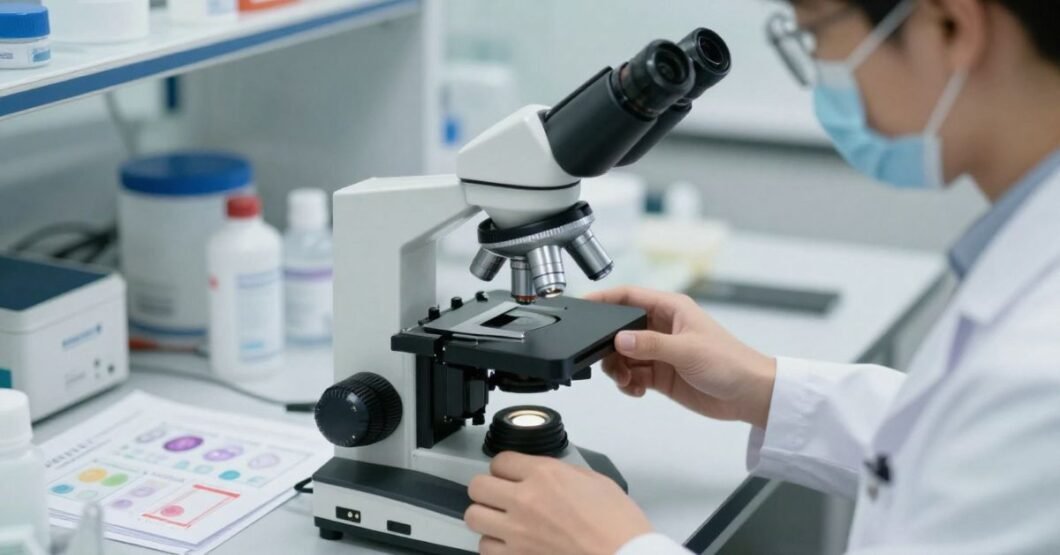
An optical microscope, also called a light microscope, is a device used to magnify small objects using light and lenses. It helps users see items like cells, bacteria, and tissue slices that are invisible to the naked eye.
Key Features
- Uses visible light to illuminate samples
- Lenses (such as objective and eyepiece lenses) magnify the object.
- Allows viewing of live cells, unlike many electron microscopes
Types of Optical Microscopes
- Simple Microscope: Has only one lens, like a magnifying glass
- Compound Microscope: Has two sets of lenses for higher power
- Stereo Microscope: Good for low magnification, 3D view
- Fluorescence Microscope: Uses special lighting to view glowing samples
In Healthcare
- Helps doctors and lab experts to examine tissue biopsies
- Used to detect issues like cancer cells, infections, or internal body failures
This is a must-have in many clinics and hospitals due to its affordability, ease of use, and versatility.
How Optical Microscopes Are Used in Health
These are like the eyes of a laboratory. They help health experts spot diseases early and guide treatments. Let’s look at how they are used in different areas of medicine.
Medical Applications
- Pathology: Examining tissues to detect cancer
- Microbiology: Viewing bacteria, viruses, and fungi in samples
- Hematology: Checking blood to find diseases like anemia or leukemia
- Parasitology: Detecting parasites in stool and blood samples
- Histology: Studying body tissues in detail
Surgical Use
- During complex surgeries (like brain surgeries), microscopes assist doctors in avoiding healthy areas.
Common Tools in Laboratories
- Stains and dyes are used to make structures more visible.
- Slides and coverslips hold the material under study
Using a microscope helps doctors make quicker and more accurate diagnoses, which can save lives.
Role in Failure Analysis of Medical Devices
Many medical devices like syringes, pacemakers, and implants need close inspection to ensure safety. A failure analysis checks if any part has broken or failed.
Optical Microscopy in Failure Analysis
- Helps find tiny cracks or issues in packaging
- Examines welded joints and surface defects
- Verifies cleanliness of instruments and tools
Especially in devices that need to be safe and sterile, such as surgical tools, optical microscopy is key to ensuring quality and safety.
Use of Optical Microscopy in Failure Analysis
| Application Area | Role of Optical Microscope |
| Pacemakers | Identifying microscopic fractures |
| Inhalers | Checking nozzle blockages |
| Medical packaging | Detecting contamination or seal failures |
| Surgical tools | Checking wear and tear under magnification |
This kind of inspection protects patients and ensures health products are up to international safety standards.
Benefits of Optical Microscopes in Health Labs
Why do health labs love using optical microscopes? Because they mix simplicity with power. Here are the top reasons
Major Benefits
- Low Cost: Much cheaper compared to electron microscopes
- Easy to Use: Needs less training
- Portable: Can be carried easily and doesn’t take up much space
- Fast Results: Ideal for urgent diagnoses
Bonus Advantages
- Doesn’t damage live samples
- Can be used with simple stains or advanced fluorescent dyes
Whether in small clinics or high-tech hospitals, optical microscopes are a trusted tool because they’re safe, quick, and reliable.
Examples from Real-Life Medical Cases
Here’s how optical microscopes made a life-saving difference:
Detecting Cancer Early
A patient reported swelling, but doctors couldn’t detect anything through basic tests. A sample was taken and examined under a microscope, where cancerous cells were found. The patient got timely treatment, all thanks to early optical analysis.
Infection in a Prosthetic Limb
A patient with a prosthetic leg reported discomfort. The lab team checked the surface of the implant under a microscope and discovered bacterial growth that normal inspection missed. The implant was cleaned and treated properly.
These real examples show how vital simple microscopes can be in catching hidden problems that could lead to major health issues.
Comparing Optical Microscopes with Other Tools
Let’s see how optical microscopes stand against other lab tools.
Optical Microscope vs. Other Microscopes
| Feature | Optical Microscope | Electron Microscope | Confocal Microscope |
| Cost | Low | Very High | High |
| Sample Preparation Needed | Minimal | Complex | Medium |
| Can View Live Specimens | Yes | No | Sometimes |
| Image Detail | Moderate | Very High | High |
| Portability | High | Low | Medium |
Optical microscopes might not show ultra-tiny parts like an electron microscope, but they are more practical, affordable, and easier for everyday use in hospitals.
Optical Microscopes in Educational Settings
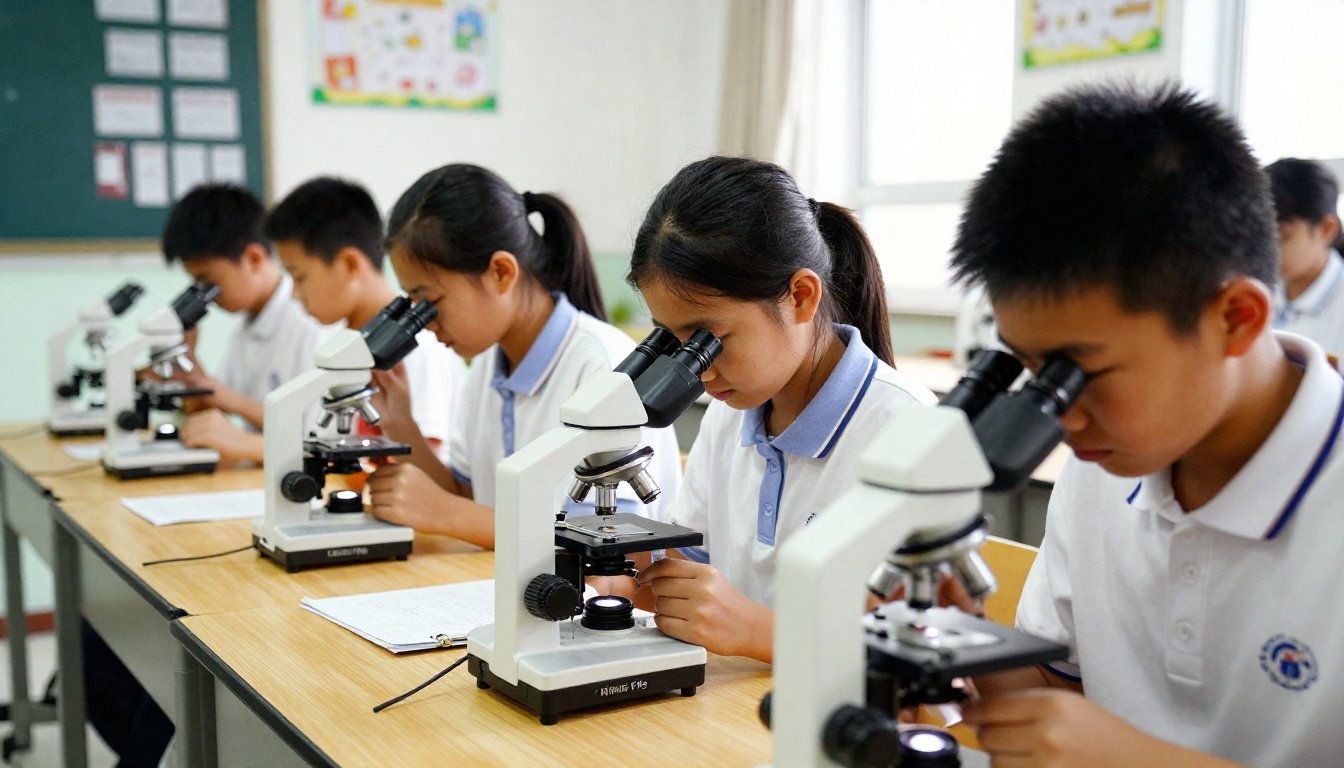
Many health professionals begin learning microscopy during studies. Medical and nursing schools use optical microscopes to teach:
What Students Learn Using Microscopes
- How different cells and tissues look
- Spotting differences between healthy and sick tissues
- Seeing real bacteria, like E. coli or staph
In a high school biology class or a top research university, optical microscopes are a must-have tool for training the next generation of health heroes.
Advances in Optical Microscopy
New technology is making optical microscopes smarter and clearer. These upgrades help health workers see better results and make faster decisions.
Latest Developments
- Digital Microscopes: Show images on a screen instead of through eyepieces. Great for sharing and saving data.
- AI Integration: Helps identify patterns like cancer shapes faster than humans sometimes can.
- Mobile Microscopy: Can be connected to smartphones for field tests in remote areas.
These improvements make it easier to bring powerful diagnostics to places without full hospitals or labs, solving global health problems.
Maintenance and Safety Tips
Just like any tool, microscopes need care to last longer and work properly.
How to Maintain an Optical Microscope
- Clean lenses regularly with lens paper.
- Keep it covered when not used
- Store in a dry, cool place
- Handle gently, especially when moving
Safety Tips in a Health Setting
- Use gloves when handling samples.
- Dispose of slides safely after analyzing biological material.
- Never touch the lenses with bare hands.
These steps help ensure the microscope stays in good shape and continues to provide accurate results.
Optical Microscope in the Future of Health
The future of health care is going to rely even more on smarter, faster, and portable diagnostic tools, and optical microscopes will be a big part of that.
Future Expectations
- Wider use of tele-microscopy for remote patient care
- Faster detection of pandemic threats through quicker sample analysis
- More affordable microscopes for low-income and rural clinics
With continuing upgrades and AI help, this simple tool will become smarter and more accessible, helping doctors worldwide make better choices.
FAQs
What is the main use of it in hospitals?
It is mainly used to examine tissue and blood samples for diseases like cancer, infections, and more.
Can optical microscopes see viruses?
No, most viruses are too small. You need an electron microscope to see them clearly, but bacteria and cells can be seen using optical microscopes.
Is It safe to use on live samples?
Yes, they use light, not harmful radiation, and can safely observe live cells.
How much does a basic optical microscope cost?
They can start as low as $100 for basic models. Advanced models with cameras cost more.
Do doctors use these microscopes directly with patients?
Usually, lab technicians and pathologists use them in labs, but some surgeries use special microscopes directly during procedures.
Conclusion
It is a simple yet powerful tool that plays a critical role in health care. It helps labs find diseases, assists doctors during surgeries, and checks the safety of medical devices. Whether used by students or experienced professionals, microscopes are everywhere in the world of medicine.
From discovering diseases to training young scientists, these microscopes offer a window into the tiny world that shapes our health. And with more digital updates coming in the future, their value will only grow.
Want to learn more about how medical tech is changing lives? Explore our other health technology guides and keep discovering!